Structural Drying & Dehumidification in Rancho Mirage, CA
Drying the surface is not drying the structure. The local crews dry the slab, framing, and wall cavities to a verified standard with meters, not guesswork.
(760) 477-2007Tap the 24/7 Coachella Valley dispatch line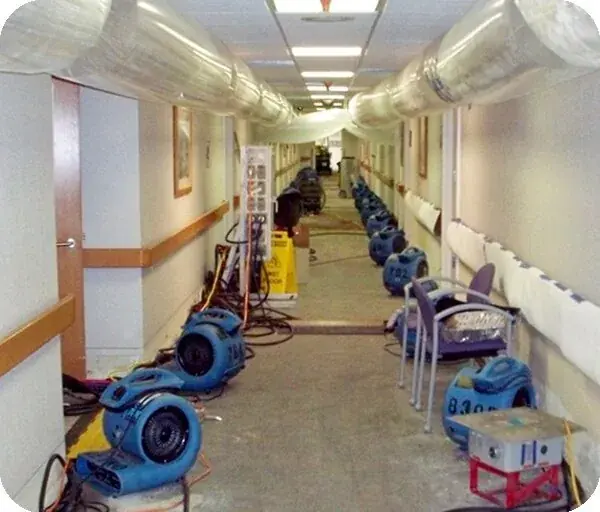
After the water is out, the real work is drying the structure, and that is where losses are won or lost. The desert's dry air pulls moisture off surfaces quickly, which fools people into thinking a room is dry when the slab, the framing, and the inside of the walls are still wet. Rancho Mirage Water Damage Co. dries to a verified standard with commercial equipment and daily moisture readings, so nothing stays wet where mold can start.
How structural drying and dehumidification is handled in Rancho Mirage
Call and dispatch
Rancho Mirage water damage pros answer day or night, and the nearest crew heads out with extractors, air movers, and moisture meters.
On-site assessment
The crew finds the source and the full reach of the water, including what wicked into the slab, subfloor, and wall cavities.
Extract and dry
The extraction crew pulls the standing water, then runs air movers and dehumidifiers to a verified dry standard, not just the surface.
Verify and document
The crew logs moisture readings until the structure is dry, then documents the loss with the photos and readings an adjuster needs.
Why surface-dry is not structure-dry
Water hides where a hand cannot feel it, and desert homes have their own traps:
- Concrete slabs that hold moisture deep and release it slowly
- Wall cavities where water wicks up drywall and into the framing
- Cabinet bases, baseboards, and the space under tile and stone
- Insulation that stays saturated long after the drywall face feels dry
The desert climate helps the surface but does nothing for water trapped inside a cavity, so a room can feel bone dry while the structure behind it is still wet. Only a meter tells the truth, which is why the crews measure instead of assume.
The structural drying process in Rancho Mirage
The crews build a drying system for the specific loss and monitor it to the finish:
- 01Map the moisture. After extraction, the crews use meters and a thermal camera to map every wet spot and set a target dry reading.
- 02Set the equipment. The crews place air movers to sweep the surfaces and LGR dehumidifiers to pull the moisture out of the air, sized to the space.
- 03Open where needed. The crews remove baseboard or drill discreet holes to dry wall cavities, and lift or float material only where it is required.
- 04Monitor and verify. The crews take daily readings and adjust the equipment until the structure hits the dry target, then document it for your carrier.
Not sure a past leak dried out properly? The crews can check it with a meter. Call and a crew is on the way across the valley.
☎ Call (760) 477-2007Drying to a standard, not a guess
Professional drying follows a published standard, and the IICRC defines the target readings and the methods the crews use, so drying is verified rather than eyeballed. Getting it right is also how mold is prevented, since the EPA mold guidance is clear that controlling moisture within a day or two is the key. Household fans and open windows cannot do this in a valley home, where the moisture has wicked into a slab and a cavity.
- Air movers create the airflow that lifts moisture off surfaces
- LGR dehumidifiers capture that moisture so it leaves the home instead of resettling
- Daily readings prove the structure is dry before the equipment comes out
Do not restore until it is dry
The most expensive mistake after a leak is closing up a wall or laying new flooring before the structure is dry. Trapped moisture grows mold behind fresh drywall. The crews confirm a dry reading first, then it is safe to rebuild.
Why the Coachella Valley calls the local pros first
Rapid local response
The response team answers 24/7 and the nearest crew heads out the moment you call, day or night, across the Coachella Valley.
IICRC S500 drying standard
Crews dry with truck-mounted extractors, air movers, and moisture meters to the IICRC S500 standard, not a mop and a fan.
Claim-ready documentation
The loss is documented with photos and daily moisture readings, the paperwork an adjuster needs to move a claim.
Desert water experts
Slab leaks, hard water, monsoon flash flooding, pools, and flat roofs: the local pros know how water moves in a desert home.
From Rancho Mirage across the Coachella Valley
Rancho Mirage water damage pros respond across the Coachella Valley, day or night.
Rancho Mirage water damage pros cover the whole Coachella Valley, day or night, from the country clubs to the east valley.
Coverage runs across Rancho Mirage, Palm Desert, Palm Springs, Cathedral City, Indian Wells, La Quinta, Indio, Bermuda Dunes, Thousand Palms, and Desert Hot Springs.
See every neighborhood and ZIP covered ›Related restoration services
Rancho Mirage water damage questions, answered
How long does structural drying take?
Most homes dry in 3 to 5 days, though a saturated slab, plaster, or hardwood can take longer. The desert's dry air helps the surface but not water trapped in a cavity or slab, so the crews run commercial equipment and monitor daily rather than guessing from how the surface feels.
Why can't I just use my own fans?
Household fans move surface air but do not pull moisture out of a slab, framing, or a wall cavity, and they cannot remove it from the home the way a dehumidifier does. In a valley home the water hides inside the structure, so it needs commercial air movers and LGR dehumidifiers.
How do you know when it is dry?
The crews set a target dry reading at the start, then take daily moisture readings with meters at every wet spot. Only when those readings hit the target across the structure do the crews pull the equipment. The crews document the readings so you and your carrier have proof it is dry.
Why does the desert climate not just dry it out?
The dry desert air dries exposed surfaces quickly, which is exactly why people misjudge a loss as finished. Water that wicked into a slab, insulation, or a wall cavity is sealed away from that air and stays wet for days, which is where mold starts.
Do you have to open my walls to dry them?
Only where needed. The crews often dry a wall cavity by removing the baseboard or drilling small, discreet holes and pushing air in, rather than opening the whole wall. The crews remove material only when it is too saturated or contaminated to save.
Can you check if an old leak dried properly?
Yes. If you had a past leak and are worried it was not dried right, the crews can check the area with a moisture meter and thermal imaging. Finding trapped moisture early is far cheaper than discovering mold behind the wall later.
Is drying covered by insurance?
Yes, drying is a core part of the mitigation on a covered water loss. The crews document the readings and the equipment. Proper drying also prevents a much larger mold claim down the road.
A local Coachella Valley crew is standing by
Water sitting means damage spreading. Call Rancho Mirage Water Damage Co. and a local crew heads out across the valley, day or night.
(760) 477-2007Call now, the desert dispatch line picks up day or night